
Dentistry Then and Now: The 70-Year-Old Debate Behind a Natural Smile
Long before digital smile previews, dentists were asking why technically successful dental work could still look wrong. That question makes dentistry then and now more than a story about new tools; it helps explain what a good smile makeover should protect today.

A smile can look straighter, brighter, and more symmetrical, and still feel unfamiliar to the person wearing it.
That tension connects two seemingly distant worlds: the mid-century denture workshop and the modern cosmetic dental consultation. Both confront a question that technology alone cannot answer:
How do you improve someone’s teeth without erasing what makes their smile theirs?
Dentistry then and now becomes more interesting when we look beyond inventions. Old dental writing reveals an ongoing debate about appearance, individuality, and the difference between replacing teeth and restoring a smile.
Key Takeaways
- Natural smiles have always been the real goal
Long before digital previews, dentists were already asking how to make restorations feel like they belonged to one person - Shade alone never makes a tooth look natural
Shape, length, translucency and the way a restoration sits beside neighboring teeth complete the illusion - Technology can preview a smile but it cannot define it
Scans, mock-ups and same-day tools improve planning only when the patient’s priorities lead the design - The most conservative option may create the strongest result
A thoughtful plan protects healthy tooth structure instead of treating every visible tooth the same way - The best smile makeover should still look unmistakably like you
Preserving familiar details can matter as much as changing color, symmetry or alignment
The 1955 Paper That Challenged the Generic Smile
In 1955, John P. Frush and Roland D. Fisher published Introduction to Dentogenic Restorations in The Journal of Prosthetic Dentistry. Their concern was individual expression in dentures.
They challenged reliance on broad tooth-selection categories, square, ovoid, and tapering, and argued that mechanical progress had outpaced attention to appearance.
One memorable passage described a seminar where dentists inspected well-made dentures but could not identify anything individual about their intended wearers. The authors used the demonstration to question whether technical polish was enough.
Their proposed framework included age, personality, and sex. Some assumptions reflect period stereotypes rather than principles to copy today. The useful question is whether a design suits its wearer.
This was a discussion of dentures, not the invention of veneers or modern smile makeovers. The authors also acknowledged that interest in dental appearance predated their work. It documents an existing debate, not the first time dentistry cared about beauty. Frush and Fisher, 1955
The Surprising Connection Between Dentures and Smile Makeovers
Dentures replace missing teeth. Crowns cover existing teeth or implant abutments. Veneers cover the front surfaces of teeth. These are different treatments, with different reasons for use.
Yet the historical debate raises a question that spans them: what makes a replacement or restoration belong in a particular smile?
Consider a hypothetical patient with one older crown, a chipped neighboring tooth, and natural teeth that have changed shade. Fixing each concern independently may leave the patient with several individually acceptable results that do not look coordinated.
A smile makeover conversation brings those decisions together. Which teeth actually need treatment? Which should remain untouched? What needs to match? What sequence makes sense?
That is the useful bridge in dentistry then and now: looking beyond an isolated dental object to the person who will live with it.
Dentistry Then and Now: What Actually Changed?
It is tempting to tell this story as a simple leap from crude dental work to flawless modern smiles. That would overlook the skill of earlier clinicians and overstate what current technology guarantees.

A more useful comparison focuses on the available tools and the questions patients can ask.
| Question | Earlier approaches and debates | Contemporary planning consideration |
|---|---|---|
| How should teeth be selected? | Broad tooth forms and individualized denture arrangement | How proposed changes relate to existing teeth, the face, and patient preferences |
| What counts as success? | Debate about appearance alongside fit and function | Health, comfort, appearance, and realistic expectations considered together |
| How can the result be discussed? | Physical tooth arrangements and laboratory work | Photographs, physical mock-ups, and digital tools where appropriate |
| How is a restoration produced? | Conventional fabrication and laboratory stages | Laboratory craftsmanship, digital workflows, or a combination |
| How much should change? | Replacing missing or damaged structures | Comparing options while considering how much healthy tooth structure each requires |
Comparing dentistry then and now shows how digital tools expanded the ways dentists gather information and communicate a plan. They did not invent dental artistry, and a digital image is not a promise of an identical clinical result.
Why “Natural-Looking” Means More Than White
For someone worried about a crown looking fake, choosing a shade is an understandable starting point. But it should not be the entire conversation.
Several appearance questions are worth bringing to a consultation:
- Will the tooth’s shape fit its neighbors?
- Does its length work with the smile?
- How will the material handle light?
- Will the contour look appropriate near the gum?
- Will the result feel comfortable during everyday use?
These questions also help make a vague request—“I want it to look natural”—more specific.
Bring photographs of your own smile that you like. Explain whether you want a noticeable transformation or a change that other people may barely detect. Identify the features you want to keep.
A slightly distinctive smile is not automatically a problem to correct.
A Modern Smile Makeover Should Start With Choices
In dentistry then and now, a “smile makeover” describes a coordinated plan rather than one mandatory procedure.
Depending on the examination and goals, the discussion may involve whitening, alignment, bonding, veneers, crowns, or a combination. Each option needs its own justification.
Veneers and crowns are not interchangeable. Veneers cover the front surface, while crowns provide more extensive coverage. The American Dental Association notes that veneers can address concerns such as chips, staining, and misshapen teeth, but treatment involving enamel removal is irreversible. Existing decay or gum disease needs attention first.
Crowns may be appropriate for weakened or broken teeth, among other indications. Wanting a brighter smile does not by itself establish that every visible tooth needs a crown.
Treatment order matters, too. Whitening does not change the color of crowns, veneers, or fillings. Someone considering both whitening and restorative work should discuss the intended final shade before treatment begins.
Same-Day Technology Changes Timing, Not the Goal
CEREC combines digital scanning, design, and manufacturing capabilities that can support permanent restorations in a single visit for suitable cases. That is a meaningful change in how some treatment can be delivered.
But “same-day crown” and “same-day smile makeover” are different promises.
A coordinated plan may include treatments with different schedules. The useful question is not simply how quickly a restoration can be made. It is why a particular workflow and material suit the tooth being treated.
Technology can help execute a decision. It cannot make the patient’s priorities clear unless someone asks.
Five Questions Worth Asking Before Changing Your Smile
- What can we preserve?
Ask which healthy teeth and familiar features can remain as they are - Why does each tooth need its proposed treatment?
A coordinated appearance does not require identical treatment everywhere - What can I evaluate before committing?
Ask about photographs, mock-ups, temporaries or digital previews and what each one cannot predict - How will existing dental work affect the plan?
Discuss shade differences and whether older restorations actually need replacement - What will maintenance involve?
Understand follow-up care, possible repairs and the implications of any irreversible treatment
These questions turn the consultation into a conversation about your own smile, rather than a choice from a gallery of someone else’s results.
The Most Personal Part of Dentistry Has Survived Its Technology
Ultimately, while the tools in our hands have evolved drastically over the last 70 years, the true measure of a successful restoration remains exactly what it was decades ago: a smile that feels completely and authentically yours.
At The Village Dental, we believe that the most advanced clinical technology is only as effective as the conversation that guides it. If you are ready to explore what a personalized smile makeover looks like, schedule a consultation with our team today.
Together, we can look beyond the digital previews and design a lasting result that protects your oral health, respects your individuality, and is unmistakably you.”
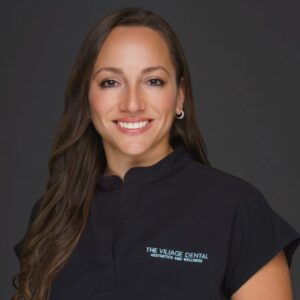
Dr. Alexandra Castillo is a trusted family dentist, cosmetic dentist, restorative, and implant dentist in Pinecrest, FL, serving patients at The Village Dental: Aesthetics and Wellness. She earned her Bachelor of Science in Psychobiology and Neuroscience from the University of Miami and her Doctor of Medical Dentistry from Nova Southeastern University. With more than 15 years of experience in dentistry, Dr. Castillo spent over a decade caring for patients at the practice before proudly taking ownership in 2023.
Dedicated to personalized, high-quality care, Dr. Castillo offers a full range of services including preventive dentistry, smile makeovers, dental implants, Invisalign, restorative treatments, and same-day crowns using advanced CEREC technology. She believes dentistry should support both confidence and overall wellness and takes time to educate patients so they can make informed decisions about their oral health and long-term health.
Dr. Castillo is an active member of the American Dental Association, Florida Dental Association, and South Florida District Dental Association. A former President of the Miami-Dade Dental Society and a CEREC mentor, she remains committed to continuing education and advancing modern dentistry.
Originally from Caracas, Venezuela, Dr. Castillo moved to Miami in 1995 and is proud to serve the diverse South Florida community. Known for her warm approach and focus on patient comfort, she strives to create a welcoming, personalized experience for every patient. At The Village Dental, Dr. Castillo and her team provide compassionate, wellness-focused dentistry for families throughout Pinecrest, Palmetto Bay, South Miami, Coral Gables, and Kendall.